Taiwanese Hangul
| Taiwanese Hangul | |
|---|---|
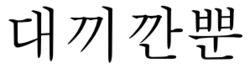 Chinese characters "臺語諺文" written in Taiwanese Hangul | |
| Script type | |
| Creator | Hsu Tsao-te (first proposed) |
Period | since 1987 |
| Languages | Taiwanese Hokkien |
| Related scripts | |
Parent systems | Hangul
|
| Part of a series on |
| Written Hokkien |
|---|
 |
|
Mixed script (Hàn-lô) |
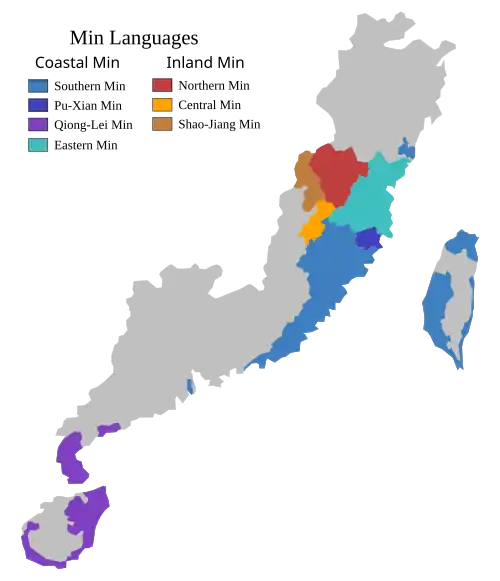
Taiwanese Hangul (Hangul: 대끼깐뿐; Chinese: 臺語諺文; pinyin: Táiyǔ Yànwén; Pe̍h-ōe-jī: Tâi-gí Gān-bûn) is an orthography system for Taiwanese Hokkien (Taiwanese). Developed and promoted by Taiwanese linguist Hsu Tsao-te in 1987, it uses modified Hangul letters to represent spoken Taiwanese, and was later supported by Ang Ui-jin.[1][2] Because both Chinese characters and Hangul are both written in the space of square boxes, unlike letters of the Latin alphabet, the use of Chinese-Hangul mixed writing is able to keep the spacing between the two scripts more consistent compared to Chinese-Latin mixed writing.
Letters
Initials
| Bilabial | Alveolar | Alveolo-palatal | Velar | Glottal | ||||||
|---|---|---|---|---|---|---|---|---|---|---|
| Voiceless | Voiced | Voiceless | Voiced | Voiceless | Voiced | Voiceless | Voiced | Voiceless | ||
| Nasal | ᄆ [m] ㄇ 毛 (mo͘ ) |
ᄂ [n] ㄋ 耐 (nāi) |
ㄸ [ŋ] ㄫ 雅 (ngá) |
|||||||
| Stop | Unaspirated | ᄇ [p] ㄅ 邊 (pian) |
ᄈ [b] ㆠ 文 (bûn) |
ᄃ [t] ㄉ 地 (tē) |
ᄀ [k] ㄍ 求 (kiû) |
ᄁ [ɡ] ㆣ 語 (gí) |
||||
| Aspirated | ᄑ [pʰ] ㄆ 波 (pho) |
ᄐ [tʰ] ㄊ 他 (thaⁿ) |
ᄏ [kʰ] ㄎ 去 (khì) |
|||||||
| Affricate | Unaspirated | ᄌ [ts] ㄗ 曾 (tsan/chan) |
ᄍ [dz] ㆡ 熱 (joa̍h) |
ᄌ [tɕ] ㄐ 尖 (tsiam/chiam) |
ᄍ [dʑ] ㆢ 入 (ji̍p) |
|||||
| Aspirated | ᄎ [tsʰ] ㄘ 出 (tshut/chhut) |
ᄎ [tɕʰ] ㄑ 手 (tshiú/chhiú) |
||||||||
| Fricative | ㅅ [s] ㄙ 衫 (saⁿ) |
ㅅ [ɕ] ㄒ 寫 (siá) |
ᄒ [h] ㄏ 喜 (hí) | |||||||
| Lateral | ᄅ [l] ㄌ 柳 (liú) |
|||||||||
Vowels
|
| |||||||||||||||||||||||||||||||||||||||||||
Coda endings
| Bilabial | Alveolar | Velar | Glottal | |
|---|---|---|---|---|
| Nasal consonant | ᄆ [m] ㆬ (-m) |
ᄂ [n] ㄣ (-n) |
ㅇ [ŋ] ㆭ (-ng) |
|
| Stop consonant | ᄇ [p̚] ㆴ (-p) |
ᄃ [t̚] ㆵ (-t) |
ᄀ [k̚] ㆻ (-k) |
ᄒ [ʔ] ㆷ (-h) |
Tone markings
| No. | Hangul | Latin diacritics | Chinese tone name | Examples Hangul/Latin/Hanzi (Listen 🔊) meaning |
|---|---|---|---|---|
| 1 | ᄋ | absent | 陰平 (yinping) dark level |
카ᄋ/kha/跤 🔊 foot; leg |
| 2 | ᄅ | ◌́ | 上聲 (sióng-siaⁿ)/陰上 (yinshang) rising / dark rising |
쥐ㄹ/tsúi/水 🔊 water |
| 3 | ᄂ | ◌̀ | 陰去 (yinqu) dark departing |
갈ㄴ/kàu/到 🔊 arrive |
| 4 | ᄋ | absent | 陰入 (yinru) dark entering |
빻ㅇ/bah/肉 🔊 meat |
| 5 | ᄉ | ◌̂ | 陽平 (yangping) light level |
옹ㅅ/ông/王 🔊 king |
| (6) appears only in Lukang dialect; merged to 7 in the prestige dialect |
not devised | ◌̆ | 陽上 (yangshang) light rising |
[]/huǎn (Lukang)/犯 violate / commit (a crime) |
| 7 | ᄀ | ◌̄ | 陽去 (yangqu) light departing |
환ㄱ/huān (prestige)/犯 🔊 violate / commit (a crime) |
| 8 | ᄇ | ̍ (overstroke/vertical line above) |
陽入 (yangru) light entering |
쫳ㅂ/joa̍h/熱 🔊 hot |
| Continuous tone sandhi | ㅣ | absent | occurs when a character/syllable is before another one in a phrase. Rule of the prestige dialect: 5→7, 7→3, 3→2, 2→1, 1→7; 4→8, 8→4 |
대시끼ㄹ/Tâi-gí/臺語 🔊 Taiwanese language |
Different use of Hangul between Taiwanese and Korean
| Taiwanese Hokkien | Korean | Note | |
|---|---|---|---|
| ㅃ | /b/, a voiced consonant | /p͈/, a tense consonant | |
| ㄲ | /g/, a voiced consonant | /k͈/, a tense consonant | |
| ㅉ | /ʣ/ or /ʥ/, a voiced consonant | /t͡ɕ͈/, a tense consonant | |
| ㄸ | /ŋ/, | /t͈/ | as the syllable onset such as 따 |
| ㅎ | /ʔ/, a glottal stop | /t̚/ | as the syllable coda such as 앟 |
| ㅅ | /ⁿ/, vowel nasalization | /t̚/ | as the syllable coda such as 앗 |
| ㅆ | /ⁿʔ/, a combination of ㅅ and ㅎ | /s͈/ or /t̚/ | as the syllable coda such as 았 |
| ᅥ | /o/ or /ə/ | /ʌ/ | |
| ᅩ | /ɔ/ | /o/ | |
| ㅐ | /ai/ | /ɛ/ | |
| 알 | /au/ | /aɭ/ | |
| ㅡ | silent | /ɯ/ | |
| ㅢ | 읨/m̩ʔ/, 읭/ŋ̍ʔ/ | /ɰi/, /i/, /ɛ/ |
Examples
| Taiwanese Hangul | Pe̍h-ōe-jī | ||
|---|---|---|---|
| Chinese characters | 關係行善的教訓
恁著謹慎,毋通為著欲予儂看,故意蹛儂的面前顯示恁的善行; |
||
| Chinese-Hangul mixed writing |
關係行善에教訓
린뎧謹慎,음탕為뎧뼇호儂看,故意돠儂에面前顯示린에善行; |
Chinese-Latin mixed writing |
關係行善ê教訓
Lín tio̍h謹慎,m̄-thang為tio̍h boeh hō͘儂看,故意toà儂ê面前顯示lín ê善行; |
| Hangul | 관헤 형센 에 갈훈
린 뎧 긴신,음탕 위뎧 뼇 호 랑 쾃,고이 돠 랑 에 삔졍 헨시 린 에 센형; |
Romanization | Koan-he Hêng-siān ê Kàu-hùn
Lín tio̍h kín-sīn, m̄-thang ūi-tio̍h boeh hō͘ lâng khoàⁿ, kò-ì toà lâng ê bīn-chêng hián-sī lín ê siān-hêng. |
References
See also
- Cantonese Hangul
External links
| ||||||||||||||||||||||||||||||||||||||||||||||||||||||||||||||||||||||||||||||||||||||||||||||
| ||||||||||||||||||||||||||||||||||||||||||||||||||||||||||||||||||||||||||||||||||||||||||||||
| ||||||||||||||||||||||||||||||||||||||||||||||||||||||||||||||||||||||||||||||||||||||||||||||
| ||||||||||||||||||||||||||||||||||||||||||||||||||||||||||||||||||||||||||||||||||||||||||||||

| ||||||||||||||||||||||||||||||||||
| ||||||||||||||||||||||||||||||||||
| ||||||||||||||||||||||||||||||||||